With over 100 million records, we are the official resource for researching Scottish family history.
Whether you’re just starting out or want to dive deeper into our records, these tips will help you search with confidence and make your next discovery.
1. Know where to look
We offer several record sets, each offering different insights into your ancestors' lives:
- Birth, marriage and death registers from 1855: start here to trace your ancestors
- Church registers (1553–1854): trace ancestors’ births, baptisms, marriages and deaths in church records before civil registration began in 1855
- Census returns: search the lists of people recorded in censuses taken every 10 years in Scotland from 1841 onwards
- Tax records: uncover property and social history
- Wills and testaments: learn about estates and family connections
- Employment records: find ancestors who were in the Women’s Land Army, or worked as lighthouse keepers
- Prison registers: uncover details about ancestors who were in prison
2. Start with person A
Start with someone in your more recent family history whose key life events you already know – a date of death, place of birth, or marriage details.
From there, you can work backwards using their birth, death or marriage certificates to find details of their parents.
3. Work in reverse
Look for your ancestor's death certificate first. It reveals clues like their age, address, and parents’ names – giving you a new link in the chain to follow back in time.
It also records who informed the registrar of their death, which can hint at children or a partner.
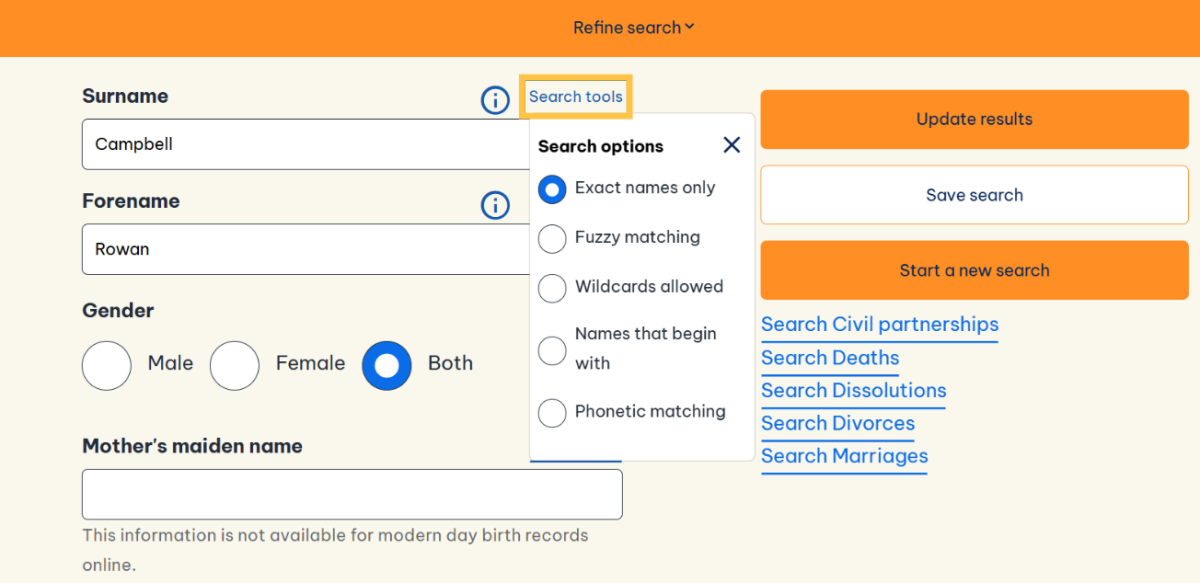
4. Search tools
The "Refine search" options are game changers. Experiment with all of them:
• Fuzzy matching finds similar spellings – essential for inconsistent historical records
• ‘Names that begin with’ catches variations you might not expect. Searching "Douglas" will also return "Douglass"
• Wildcard lets you add an asterisk to catch missing or variable letters. For example, searching "Ne*l" captures "Neal", "Neil", "Neill", "Newall"
5. Less is more
Your ancestors may appear under unexpected spellings, nicknames, or different names entirely. If your search comes up short, try removing details — drop middle names, initials, or leave the forename blank.
This simple approach often reveals records that more detailed searches miss.
6. Read tricky handwriting
Struggling to decipher the writing in our records? Look across the whole record to see how the writer formed each letter, then apply that to the word you're trying to read.
For records between 1500 and 1700, our Scottish Handwriting Kit offers a step-by-step guide.
7. Sibling clues
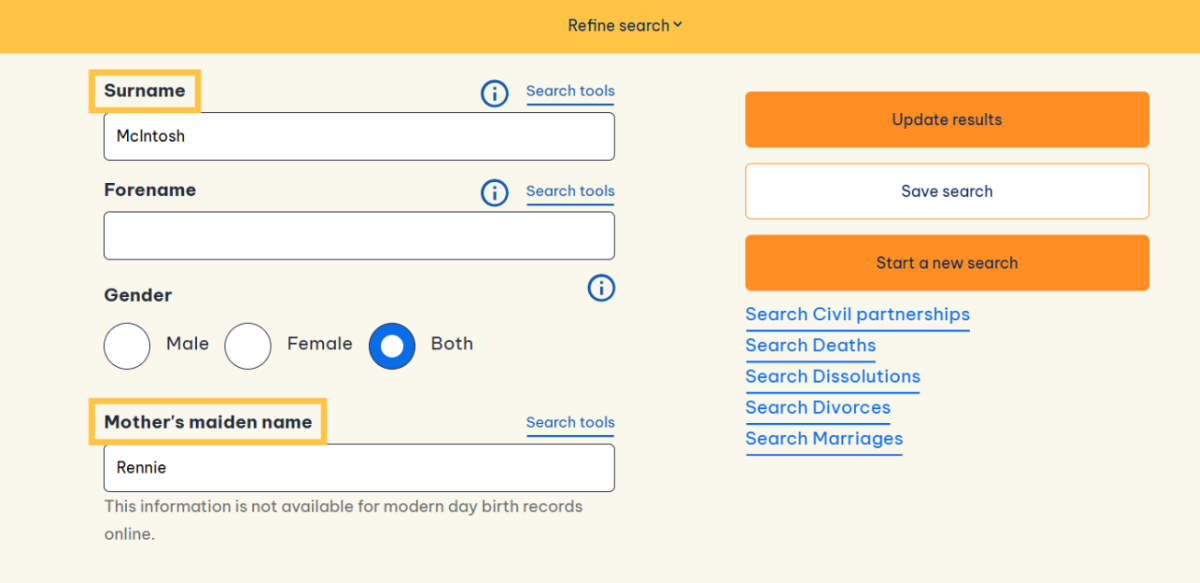
Looking for all children from a particular marriage? Search birth records using the married surname, add a year range, and include the mother's maiden name. Siblings will be listed together.
8. Tricky spellings
Historical spelling could be wonderfully creative. Elizabeth might appear as Elspaithe, Elezebeth, or Elizabeyth.
Combine wildcard searches with fuzzy matching to cast a wider net.
9. Census clues
Struggling to find someone’s birth details? Check our census records after 1851 – it often records where a person was born.
10. Try maiden names
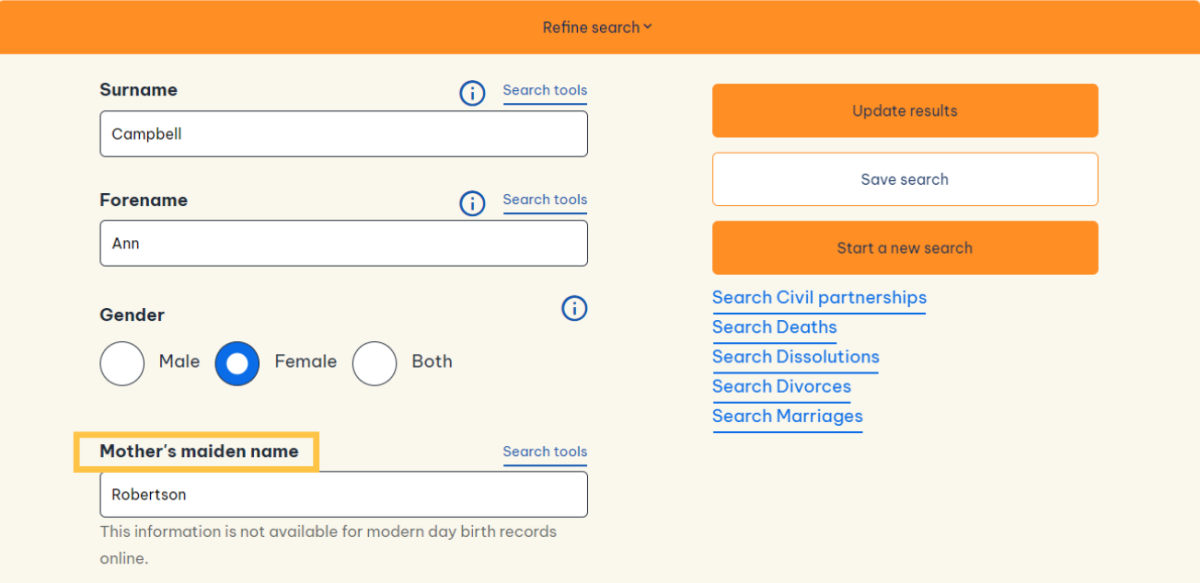
If you're searching for a common surname in birth certificates, use the "mother's maiden name" field to narrow down your results.
Start your search
If you're new to family history research, our getting started page has further tips to help you.
For more detailed guidance on each record set and what you can find in them, view our record guides.